AI Didn’t Kill SEO—It Made It Weirder (and Way More Powerful)
Here’s the twist nobody saw coming: after two years of panic about ChatGPT replacing Google, the data shows that old-school SEO fundamentals matter more than ever. But here’s the catch—you now need AI to execute them at scale. Welcome to 2025, where the rules haven’t changed, but the game has gotten exponentially faster.
The transformation happened at warp speed. What took mobile optimization nearly a decade to mature, AI accomplished in under 24 months. And while marketers scrambled to predict whether SEO would survive, researchers were quietly documenting something far more interesting: AI isn’t replacing SEO. It’s mutating it into something bigger, stranger, and significantly more technical.
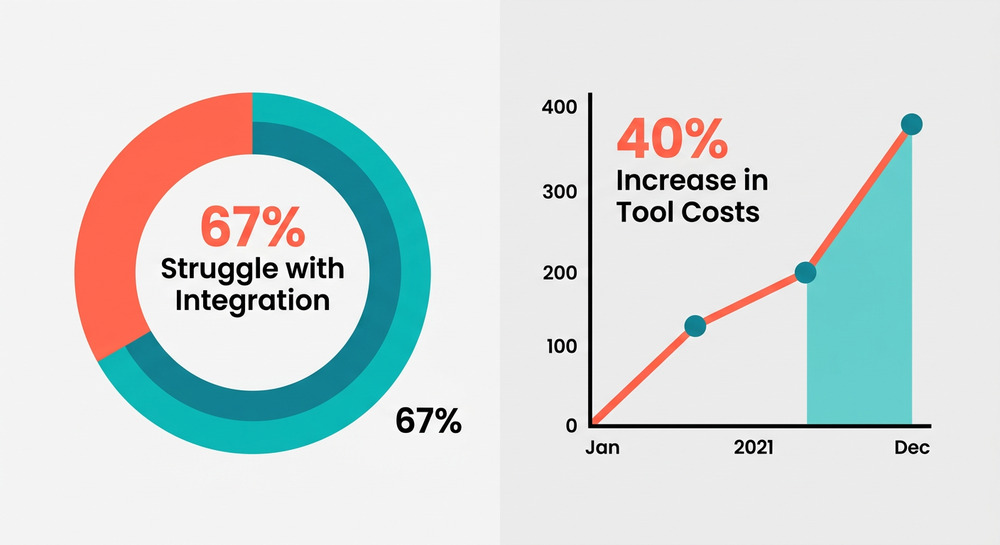
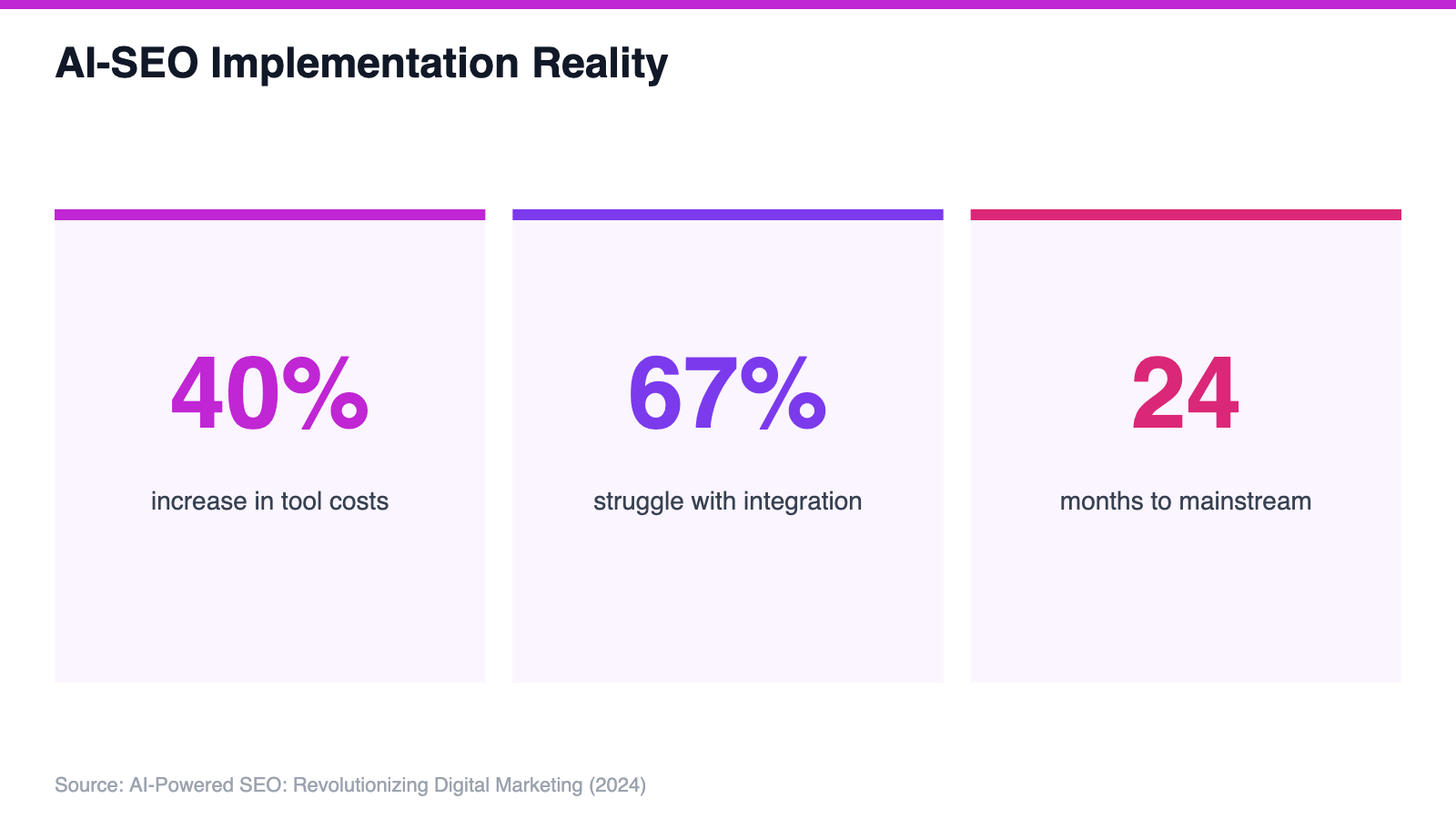
TL;DR: AI hasn’t killed SEO—it’s supercharged it. The WHAT (content), WHERE (technical structure), and WHO (authority) fundamentals still rule. But websites using AI-powered tools are seeing 23-47% ranking improvements vs. 8-15% for traditional methods. The catch? 67% of organizations struggle to integrate AI into existing workflows, and tool costs are up 40%. Winners will blend AI horsepower with human strategy.
Key Takeaways
- Fundamentals haven’t budged: Despite the AI revolution, the WHAT-WHERE-WHO trinity remains critical for Google relationships
- AI tools deliver 3x better results: AI-augmented SEO shows 23-47% ranking improvements vs. 8-15% for traditional methods
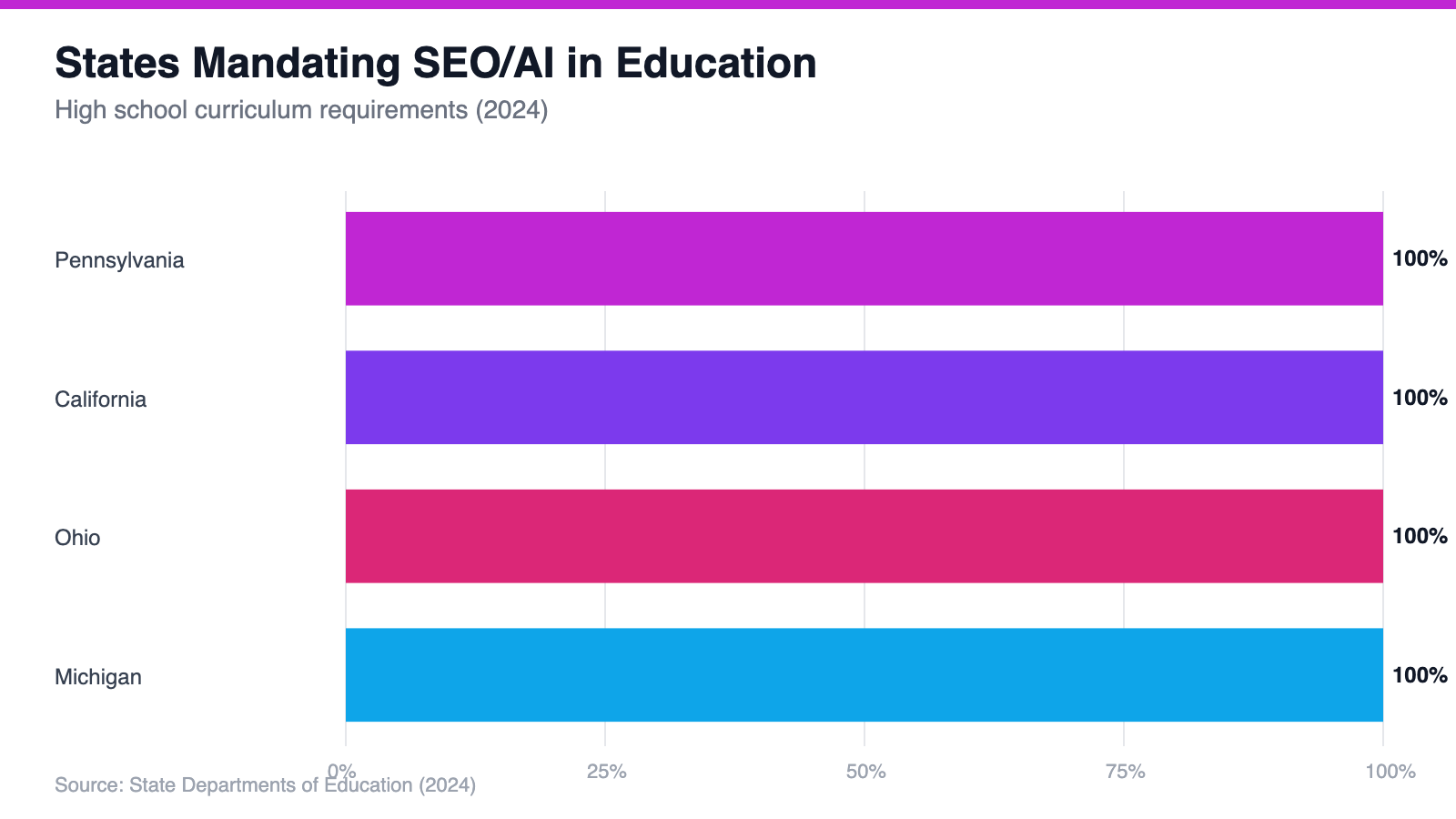
- High schools are teaching SEO: Pennsylvania, California, Michigan, and Ohio now mandate SEO and AI ethics in state curricula
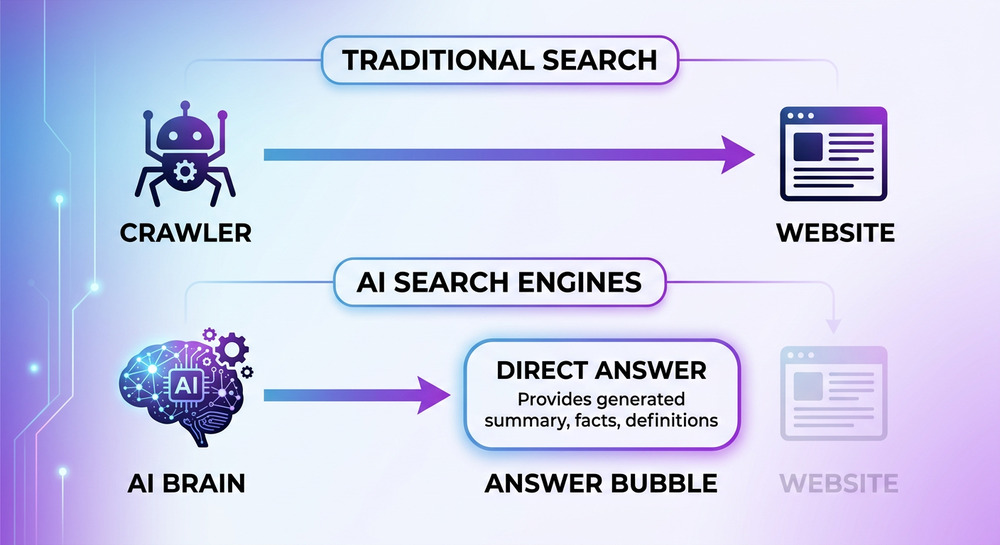
- New search engines don’t crawl—they create: ChatGPT and Gemini generate answers directly, potentially bypassing your website entirely
- Regulated industries are winning big: Cannabis companies using AI-SEO are dominating by navigating compliance at scale
- Geographic arbitrage exists: AI optimization varies dramatically by language and region, creating temporary advantages
The Plot Twist: Why “The Basics” Refuse to Die
Everyone expected AI to rewrite the SEO playbook from scratch. Instead, research from AMA Media delivered a counterintuitive finding: the foundational trinity of WHAT (your content substance), WHERE (technical placement and structure), and WHO (audience and authority) remains absolutely critical for Google relationships.
This isn’t nostalgia—it’s algorithmic reality. AI tools can generate content at unprecedented scale and spot patterns humans would miss, but they still operate within search engine frameworks that prioritize relevance, authority, and user intent. The businesses that abandoned fundamentals for AI-only strategies? They’re discovering diminishing returns while hybrid operators see compounding benefits.
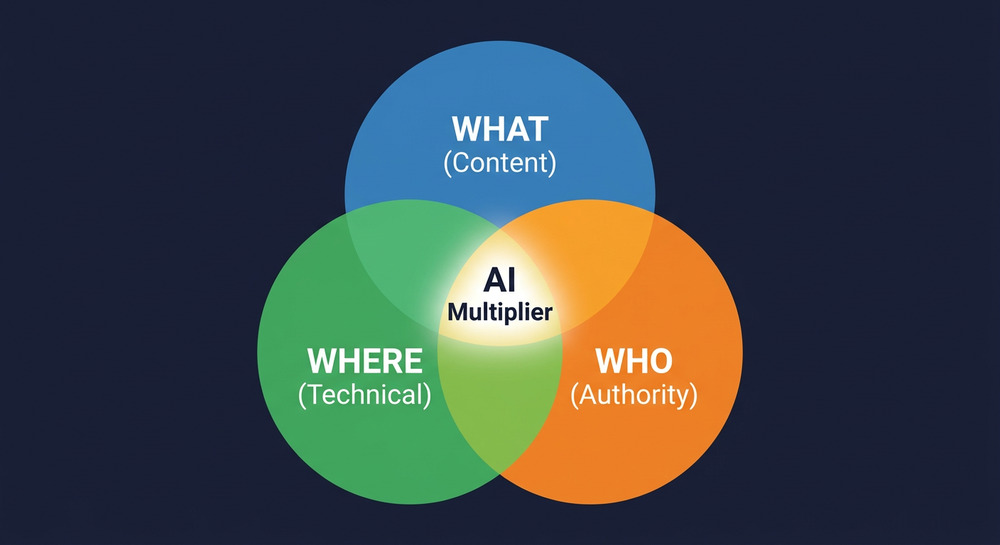
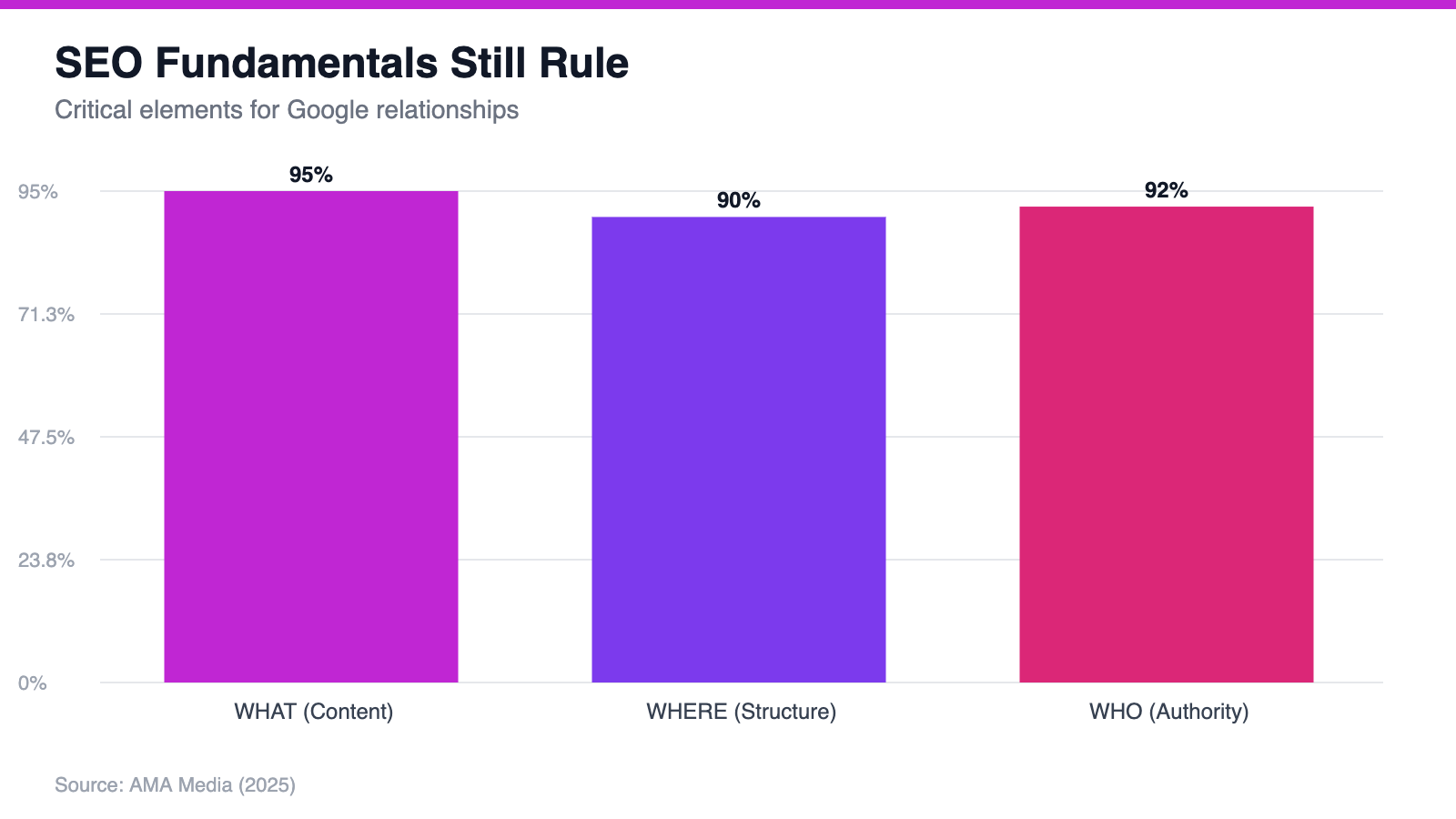
Notice the gap: AI amplifies good SEO practices but cannot compensate for poor ones. Think of AI as a multiplier—and anything multiplied by zero is still zero.
The Numbers Don’t Lie: AI-Powered SEO Crushes Traditional Methods
Let’s talk performance. According to research published in the International Journal of Manuscripts, websites using AI-powered SEO tools see average ranking improvements of 23-47% within six months. Traditional optimization methods? A modest 8-15%.
But here’s what the headlines miss: the variance in results has decreased dramatically. AI brings consistency to what was previously a wildly unpredictable process. You’re not just getting better outcomes—you’re getting more reliable ones.
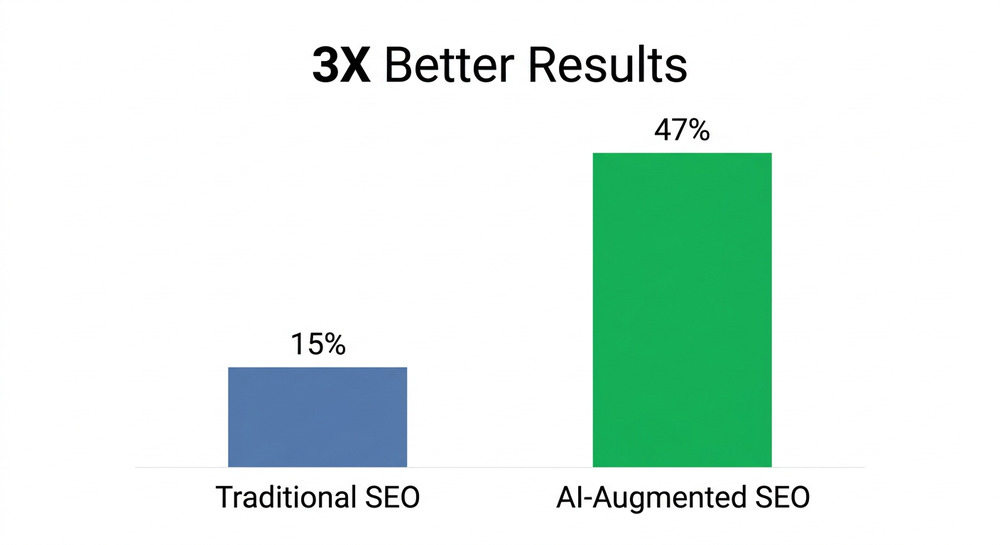
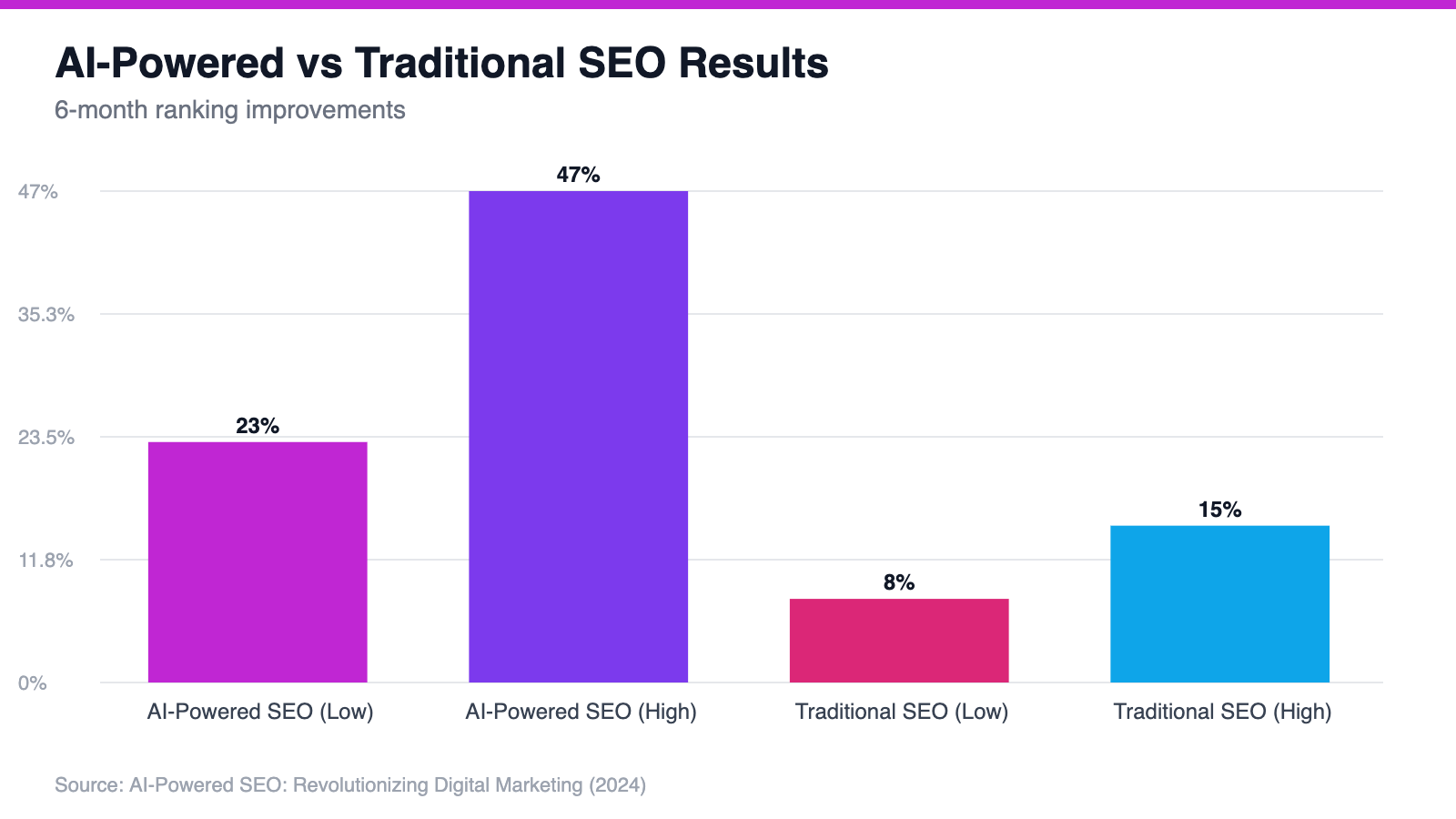
The performance gap is stark, but so are the costs. Organizations report a 40% increase in tool expenses when implementing AI-SEO solutions, and 67% struggle with integration into existing workflows. The technology works—the organizational change management is the hard part.
What AI-SEO Tools Actually Do Now
The scope of AI-powered SEO has exploded. NSF data shows the SEO tools vertical now includes evaluation and ranking of site pages, writing SEO-friendly copy, and performing real-time analysis—all simultaneously. These aren’t incremental improvements; they’re capabilities that were impossible just two years ago.
Modern AI tools can analyze millions of search patterns at once, predict algorithm changes before official announcements, and automatically adjust website elements in real-time based on performance data. Competitive SEO now requires AI augmentation not as a luxury, but as table stakes.
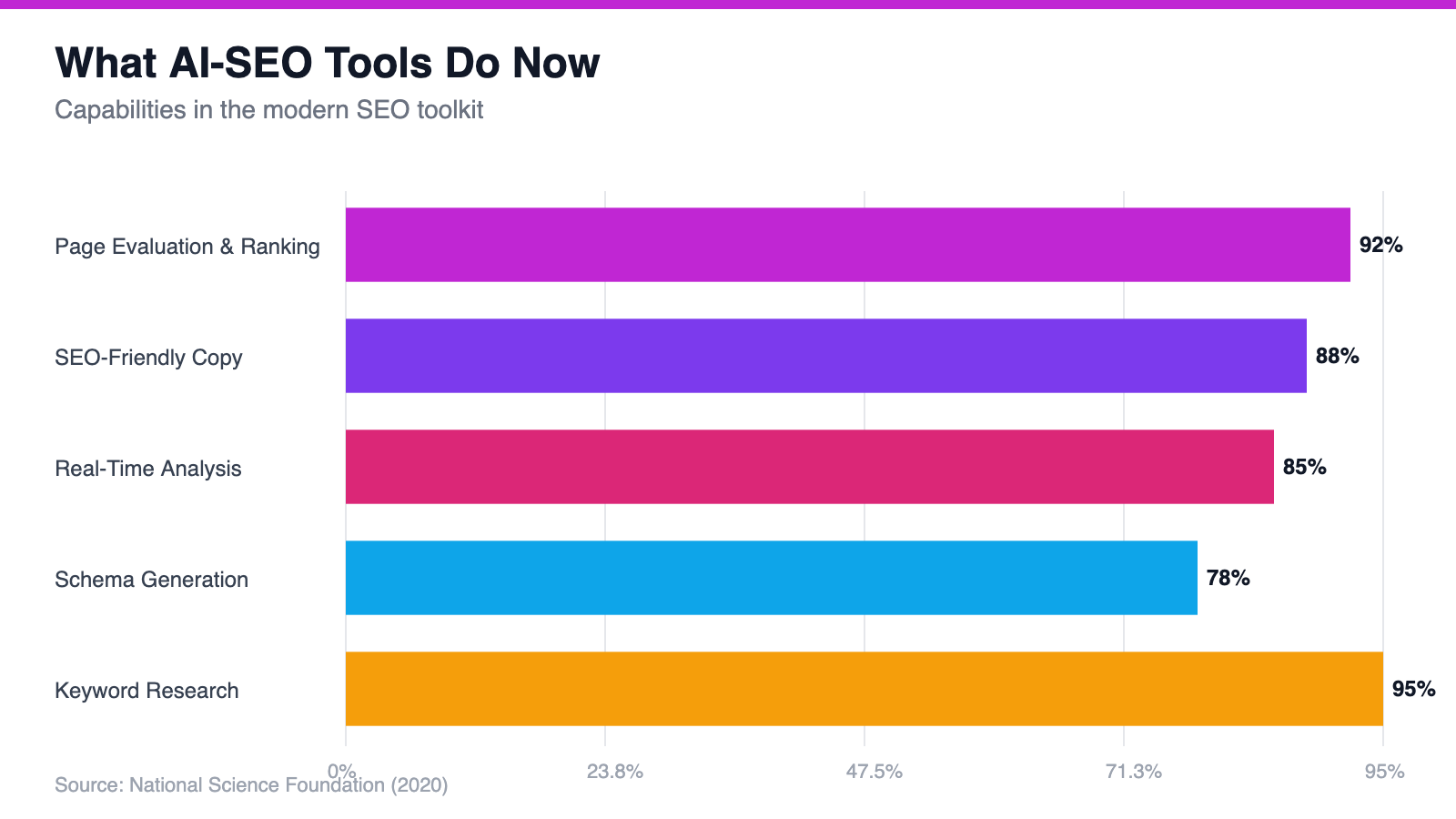
The transformation covers the entire SEO workflow—from predictive keyword research to automated schema markup generation. If you’re still doing this manually, you’re bringing a knife to a drone fight.
The Weird New World: Search Engines That Don’t Crawl
Here’s where it gets genuinely strange. Research from Barry Rodgers points out something fundamental: new AI-based engines like ChatGPT and Google’s Gemini don’t have slow crawlers—they can create content directly. This fundamentally changes SEO dynamics.
Traditional SEO relied on search engines crawling, indexing, and ranking existing content. AI-powered search engines can now generate answers directly, potentially bypassing your website entirely. The Australian Government Productivity Commission confirms this shift has “fundamentally altered the flow of online traffic.”
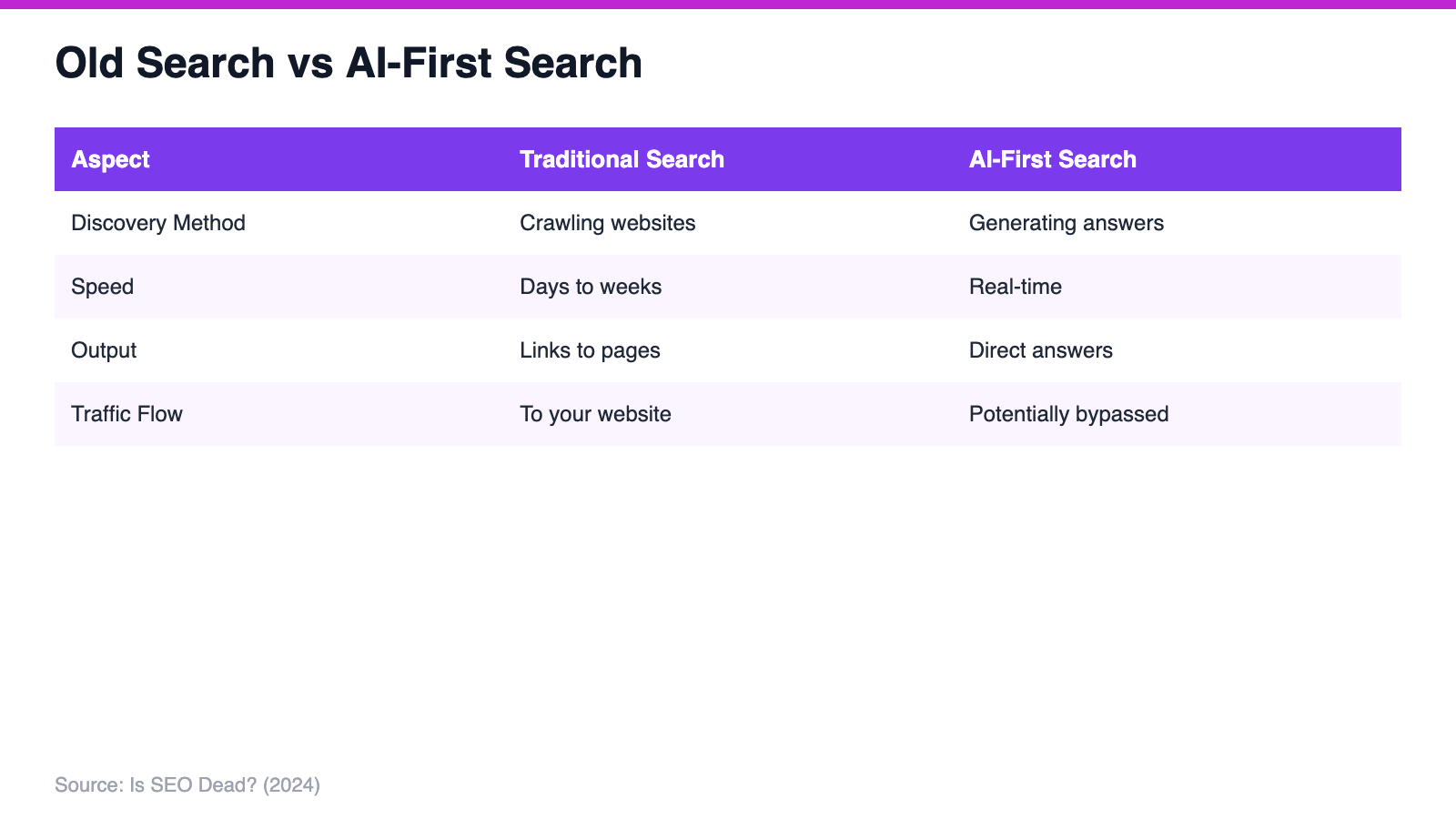
This isn’t theoretical anymore. The question isn’t whether to optimize for AI consumption—it’s how fast you can restructure your content strategy around it.
The Cannabis Industry Is Winning—And Here’s Why You Should Care
Want to see AI-SEO at its most innovative? Look at the most regulated industries. Research shows AI has become a core component of digital marketing in the cannabis industry specifically for 2025 domination strategies.
Cannabis businesses face unique nightmares: advertising restrictions, varying state regulations, and platform limitations that traditional SEO struggles to address. AI’s ability to identify compliant marketing opportunities while avoiding regulatory violations has proven transformative. The lesson for healthcare, financial services, and legal sectors? AI-SEO isn’t just for tech companies—it thrives in complexity.
If heavily regulated industries can make AI-SEO work within strict compliance frameworks, your industry has no excuse.
High Schools Are Teaching This Stuff Now
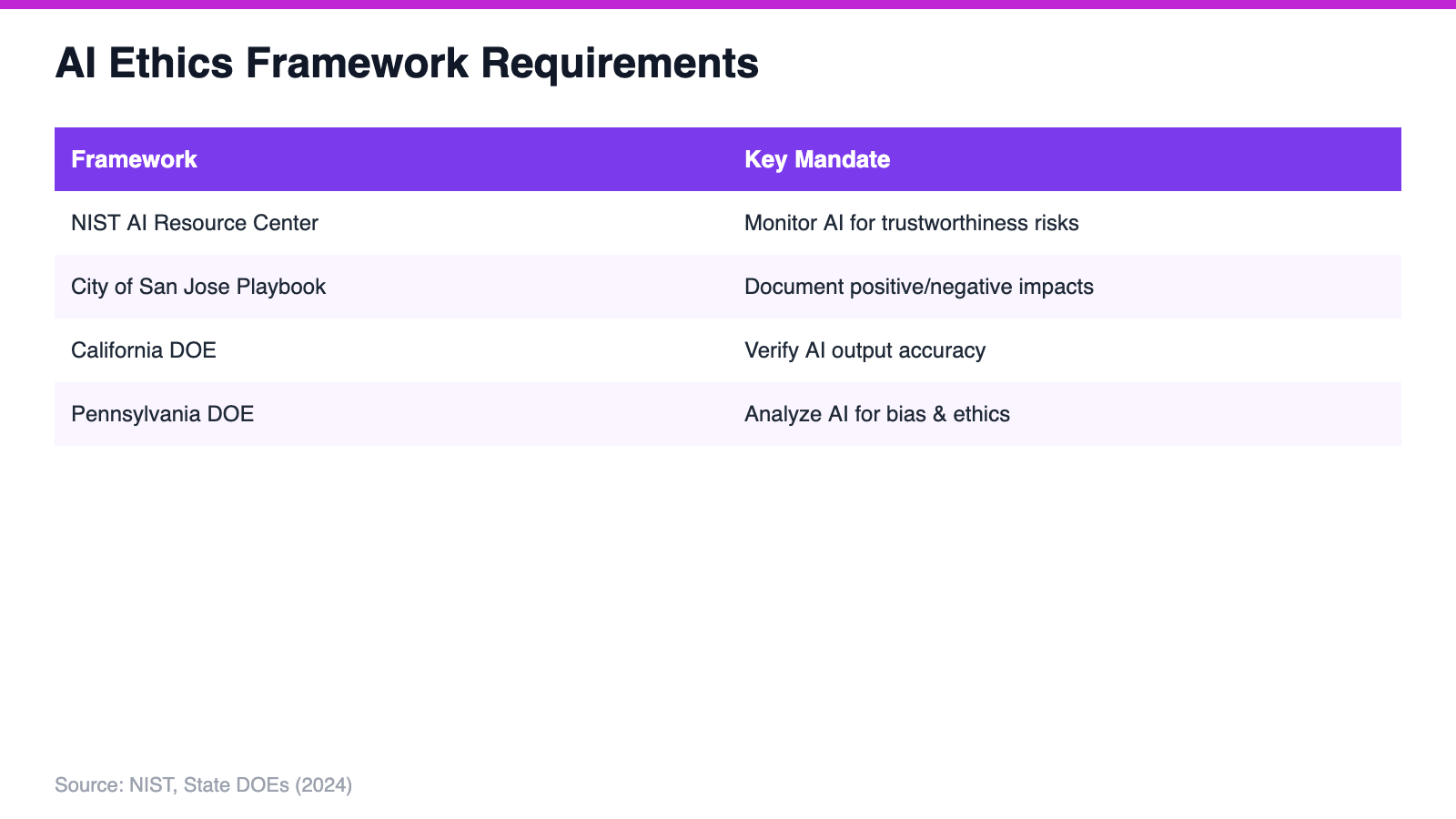
Here’s a signal you shouldn’t ignore: SEO and AI ethics are becoming standard high school curriculum. Pennsylvania now requires SEO techniques in digital multimedia programs. California mandates students employ analysis and decision-making skills to ensure validity, credibility, and accuracy of AI-generated outputs. Ohio requires analysis of how AI technology impacts society. Michigan mandates assessment of new IT technologies including SEM and SEO.
This institutionalization means two things. First, SEO is no longer a specialized skill—it’s becoming fundamental literacy. Second, competitive advantage will shift from basic implementation to advanced strategy and creative application as foundational skills become commoditized.
The Ethics Problem Nobody Wants to Talk About
With great AI power comes great responsibility—and emerging regulations. The NIST AI Resource Center framework now requires establishing procedures to monitor AI system performance for risks and negative/positive impacts on trustworthiness. The City of San Jose’s AI playbook documents that AI system impacts can be positive, negative, or both, based on organizational risk tolerances.
Organizations must develop comprehensive ethical guidelines for AI use in SEO. This includes ensuring AI-generated content is accurate and unbiased, maintaining transparency about AI use, and preventing manipulative practices that could harm user trust. States are already mandating this in education—expect regulatory requirements for businesses to follow.
Building ethical frameworks now isn’t just good citizenship—it’s regulatory preparation.
What This Means for You: The Action Plan
The data is clear, but strategy without action is just daydreaming. Here’s your playbook for the AI-SEO convergence:
Immediate Priorities (Next 90 Days)
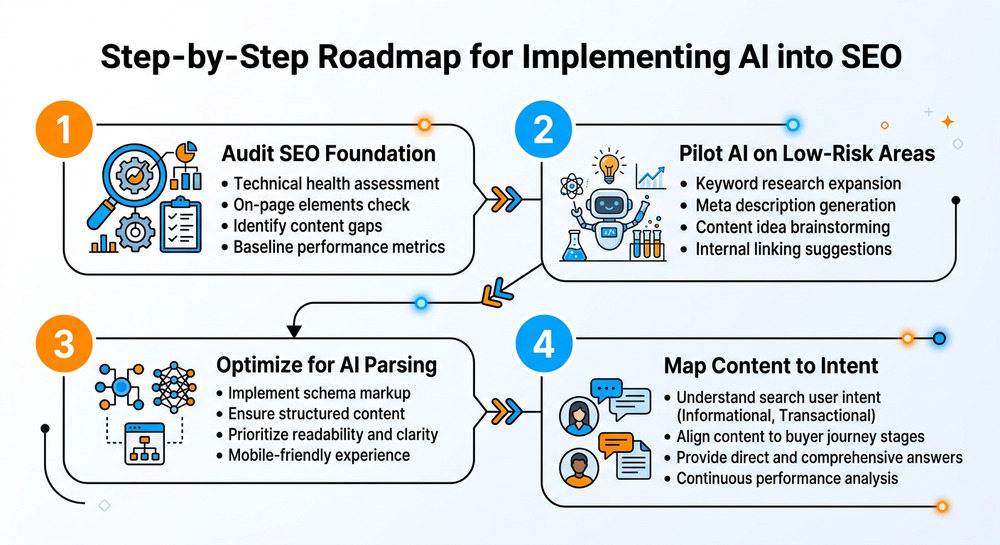
- Audit your SEO foundation first: Before implementing AI tools, ensure your basic technical SEO, site structure, and content hierarchy are solid. AI multiplies quality—including the quality of your problems.
- Pilot AI tools on low-risk, high-impact areas: Start with content optimization or technical auditing before expanding to complex applications.
- Optimize for AI consumption: Structure content with clear headers, bullet points, and factual statements that AI can easily parse and reference when generating answers.
- Map content to user intent: Create a comprehensive inventory mapped to specific intents. AI can scale this process, but the strategic framework must be human-designed.
Long-Term Strategic Shifts
- Build AI-resistant competitive advantages: Develop unique data sources, proprietary insights, and human expertise that AI cannot easily replicate.
- Create content ecosystems, not just pages: Design interconnected content systems that AI understands as comprehensive topic coverage.
- Transition from traffic to engagement metrics: As AI changes traffic patterns, focus on metrics reflecting genuine user value rather than raw visitor numbers.
- Build direct relationships: Develop email lists, app users, and direct traffic sources to reduce dependence on search engine referrals.
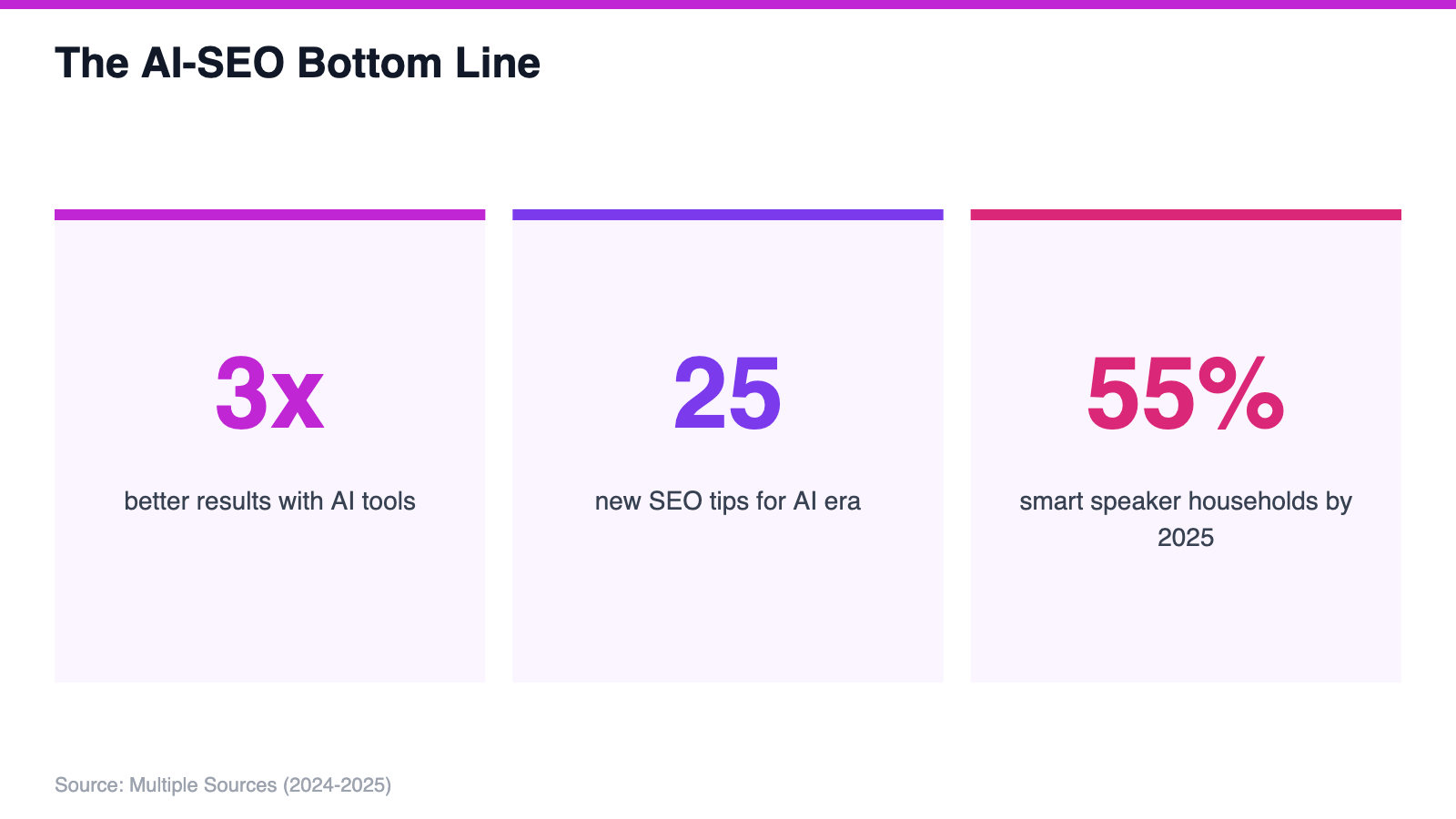
The organizations that will win aren’t the ones with the most AI tools—they’re the ones that blend AI horsepower with human strategy, ethical guardrails, and foundational excellence.
The Bottom Line
AI hasn’t killed SEO. It’s made it faster, weirder, and significantly more powerful—but also more demanding. The fundamentals still matter, but executing them manually is now a competitive disadvantage. The winners in this new paradigm will successfully blend AI capabilities with human creativity, strategic thinking, and ethical responsibility.
The question isn’t whether AI will continue transforming SEO—that’s already settled. The question is how quickly you can adapt your strategies, upskill your teams, and reimagine your approach to search visibility. Research, government frameworks, and educational initiatives all point to the same conclusion: AI-augmented SEO isn’t just the future—it’s the present reality demanding immediate action.
References
- The Impact of AI on SEO: Technical Mechanics & User Behavior Shifts (2025). https://ww1.amamedia.org/wp-content/uploads/2025/11/The-Impact-of-AI-on-SEO_-Technical-Mechanics-User-Behavior-Shifts.pdf
- AI For SEO: A Dynamic Duo for Digital Marketing Success (2024). https://d3judojthu11zu.cloudfront.net/white-papers/AI+for+SEO.pdf
- The Algorithmic Ascent: AI’s Impact on Search Engine Result Pages (2025). https://ieeexplore.ieee.org/iel8/11051343/11051358/11051477.pdf
- AI-Generated Content in SEO and Content Marketing – JETIR (2024). https://www.jetir.org/papers/JETIR2401183.pdf
- AI + SEO: The Formula for Cannabis Industry Domination in 2025 (2025). https://spokesdigital.us/wp-content/uploads/2025/05/AI-SEO-The-Formula-for-Cannabis-Industry-Domination-in-2025.pdf
- AI-Powered SEO: Revolutionizing Digital Marketing (2024). https://s3.ap-southeast-1.wasabisys.com/ijmanuscripts/manuscripts/v10i6/V10I6-1374.pdf
- Leveraging Artificial Intelligence in SEO and SEM for Public Relations (2024). https://api.taylorfrancis.com/content/chapters/edit/download?identifierName=doi&identifierValue=10.4324/9781032671482-15&type=chapterpdf
- Is SEO Dead? Understanding the Future of Search in 2025 (2024). https://www.barryrodgers.com/wp-content/uploads/2024/11/Is-SEO-Dead_-Understanding-the-Future-of-Search-in-2025.pdf
- How AI is Transforming SEO: Opportunities and Challenges (2024). https://justpaste.it/hzr6f/pdf
- Australian Government Productivity Commission Document (2024). https://engage.pc.gov.au/document/2629
- Marketing & Sales – California Department of Education (2024). https://www.cde.ca.gov/ci/ct/sf/documents/ctemsmcs.docx
- Pennsylvania Career and Technical Education Task List (2024). https://www.pa.gov/content/dam/copapwp-pagov/en/education/documents/instruction/career-and-technical-education/programs-of-study/framework/task-list-27-28-29/110801-webpage-digital-multimedia.docx
- NIST AI Resource Center Google DeepMind Gap Analysis (2024). https://airc.nist.gov/docs/Template_Google_DeepMind_gap_analysis-NIST_AIRMF_1.0.xlsx
- IT Standards – Ohio Department of Education (2024). https://education.ohio.gov/getattachment/Topics/Career-Tech/Career-Fields/Information-Technology-Career-Field/Information-Technology-Course-Competencies-2.xlsx.aspx?lang=en-US
- Michigan Gap Analysis (2024). https://www.michigan.gov/mde/-/media/Project/Websites/mde/CTE/cte_cluster/Information-Technology/110801_Digital_Multimedia_and_Information_Resource_Design_Consolidated_2011_701901_7.xlsx
- City of San Jose CA AI Playbook (2024). https://airc.nist.gov/docs/City_of_San_Jose_CA_playbook.xlsx
- National Science Foundation Supplemental Tables (2020). https://ncses.nsf.gov/pubs/nsb20204/assets/supplemental-tables/tables/nsb20204-tabs08-063.xlsx
Leave a Reply